US Apache Helicopter Crash Near Strait of Hormuz Sparks Fresh Concerns Amid Iran Peace Talks
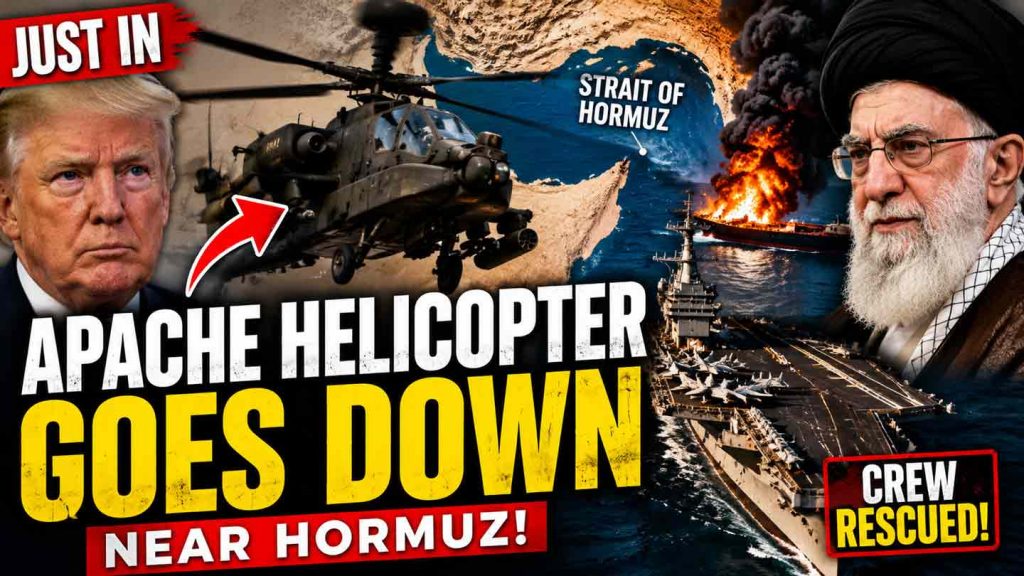
US Apache Helicopter Crash Near Strait of Hormuz Sparks Fresh Concerns Amid Iran Peace Talks
Apache Helicopter Incident Adds Tension to Fragile Middle East Situation
A U.S. Apache attack helicopter crashed near the strategically important Strait of Hormuz, raising fresh concerns about security in one of the world’s most volatile regions. While all crew members were successfully rescued and reported safe, officials are still investigating whether the incident was caused by mechanical failure or hostile action.
The crash occurred as diplomatic efforts between the United States and Iran continue, with President Donald Trump expressing hope that a potential peace agreement could be reached in the coming days. The incident highlights the delicate balance between military operations and diplomatic negotiations currently unfolding across the Middle East.
President Trump Optimistic About Potential Iran Deal
President Trump indicated that discussions with Iran remain active and productive despite ongoing tensions. Speaking after a public appearance, the president said there could be greater clarity regarding a possible agreement within the next several days.
The administration has been working to prevent further escalation following recent military exchanges between Israel and Iran. Trump also revealed that he recently spoke with Israeli Prime Minister Benjamin Netanyahu, discussing regional security concerns and efforts to maintain stability.
According to the president, both sides have temporarily reduced direct military engagement, providing a window of opportunity for diplomacy to move forward.
Strait of Hormuz Remains a Global Security Hotspot
The Strait of Hormuz remains one of the world’s most important maritime chokepoints, handling a significant portion of global oil shipments. Any military confrontation in the area has the potential to disrupt international energy markets and affect economies worldwide.
Following the Apache helicopter incident, attention has once again focused on the strategic waterway. The United States continues to enforce maritime security operations in the region while monitoring Iranian activities closely.
Military officials have emphasized that maintaining freedom of navigation through the Strait of Hormuz remains a critical priority for both the United States and its allies.
US Naval Operations Continue in Gulf Waters
In a separate development, U.S. Central Command (CENTCOM) reported that American forces intercepted and disabled an oil tanker in the Gulf of Oman after it allegedly attempted to breach an ongoing naval blockade.
According to military officials, an F-18 Super Hornet launched from the USS Abraham Lincoln carried out a precision strike targeting the vessel’s steering and engineering systems. Since the blockade was implemented, more than 130 vessels have reportedly been redirected, while several others have been disabled.
The operation underscores the continued military presence of the United States in the region as tensions with Iran remain unresolved.
Israel Maintains Pressure on Hezbollah
Although a ceasefire between Israel and Iran has reduced direct conflict, Israeli military operations against Iran-backed Hezbollah forces in Lebanon continue.
Prime Minister Netanyahu reiterated Israel’s commitment to defending its territory, warning that attacks originating from Lebanon or Iranian-supported groups would be met with a strong response. Israeli forces conducted additional operations overnight while issuing evacuation notices in affected areas.
Security experts believe Hezbollah remains a significant factor in regional stability and could influence the success or failure of ongoing diplomatic efforts.
Iran Sends Conflicting Messages on Negotiations
One of the major challenges facing negotiators is the lack of a clear and unified message from Iran’s leadership. While some Iranian officials appear open to negotiations, others have publicly questioned whether meaningful progress is possible.
Iranian representatives have emphasized the importance of releasing frozen financial assets before agreeing to broader discussions. At the same time, U.S. officials insist that concrete commitments must be made before sanctions relief or asset releases can occur.
These differing positions have complicated diplomatic efforts and raised questions about who ultimately holds decision-making authority within Iran’s government structure.
Gulf Nations Closely Watching Developments
Several Gulf nations, including Saudi Arabia, Qatar, Bahrain, and the United Arab Emirates, remain heavily involved in discussions surrounding regional security.
These countries face direct risks from any escalation involving Iran and have maintained close communication with U.S. officials. Analysts note that Iran continues to possess missile and drone capabilities capable of threatening critical infrastructure across the Gulf region.
As a result, Gulf leaders are actively participating in conversations aimed at reducing tensions and ensuring regional stability.
Global Implications of the Crisis
The outcome of negotiations between Washington and Tehran will have consequences far beyond the Middle East. Global energy markets, international shipping routes, and geopolitical alliances all depend heavily on stability in the Strait of Hormuz.
The Apache helicopter crash serves as a reminder that military incidents can occur even during periods of diplomatic engagement. As negotiations continue, world leaders remain focused on preventing further conflict while seeking a long-term solution to ongoing disputes.
Conclusion
The rescue of the Apache helicopter crew near the Strait of Hormuz comes at a critical moment in Middle East diplomacy. While peace talks between the United States and Iran continue, military tensions, regional conflicts, and competing political interests remain significant obstacles. The coming days could prove decisive in determining whether diplomacy succeeds or whether the region faces another dangerous escalation.
StraitOfHormuz #ApacheHelicopter #Iran #MiddleEast #BreakingNews #Trump #USMilitary #Israel #Hezbollah #CENTCOM