New Targeted Cancer Drug Shows Promising Tumor Shrinkage in Advanced Lung Cancer Trial
New targeted cancer drug shows promising results in advanced lung cancer, with early clinical findings reporting tumor shrinkage in some patients.
New Targeted Cancer Drug Shows Promising Tumor Shrinkage in Advanced Lung Cancer Trial
New Cancer Drug Shows Encouraging Tumor Shrinkage in Advanced Lung Cancer Patients
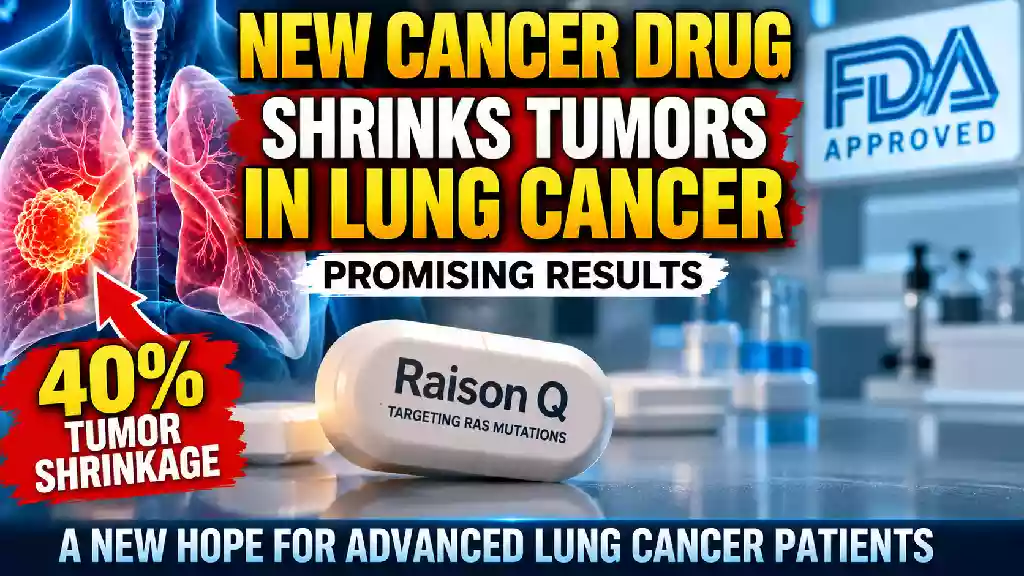
A targeted cancer drug originally approved for metastatic pancreatic cancer is now drawing attention for its potential against advanced lung cancer. Early clinical results suggest the treatment may help some patients with RAS-mutated non-small cell lung cancer, with researchers reporting meaningful tumor shrinkage and encouraging survival outcomes.
The drug, Raison Q, was described as a first-of-its-kind targeted therapy designed to address cancers driven by RAS proteins. While its initial FDA approval was for metastatic pancreatic cancer, researchers are now investigating whether the same treatment could benefit patients with other cancers involving RAS mutations.
Early Lung Cancer Results Generate Optimism
The most recent findings are particularly notable for patients with non-small cell lung cancer (NSCLC) who carry a RAS mutation.
According to the clinical results discussed in the report, roughly 40% of patients receiving the optimal dose experienced objective tumor shrinkage. Researchers also reported progression-free survival of more than eight months and overall survival of more than 16 months among these patients.
The patients included people who had already undergone previous treatment and had limited options remaining, making the early results especially significant.
The findings do not yet establish Raison Q as an approved treatment for lung cancer. Instead, they represent promising early evidence that researchers are continuing to investigate through a larger global Phase 3 clinical trial.
Why RAS Mutations Matter in Cancer
One reason the drug is attracting attention is the role of RAS proteins in cancer development.
The source states that RAS proteins are involved in approximately 50% of colorectal cancers and about 30% of non-small cell lung cancers. These proteins are also described as a major underlying cause of pancreatic cancer.
That connection has given researchers an opportunity to investigate whether a targeted therapy developed for one RAS-driven cancer could potentially be used against other cancers involving the same biological pathway.
For patients whose tumors carry the relevant mutation, this approach could eventually offer a more targeted alternative to conventional cancer treatment.
A Different Approach to Cancer Treatment
Raison Q is described as a once-daily oral medication, providing a different treatment approach from intravenous chemotherapy. The drug was developed specifically to target the biological mechanism associated with RAS proteins.
The treatment’s initial approval for metastatic pancreatic cancer was characterized by Revolution Medicines as a major advancement because pancreatic cancer has historically presented significant treatment challenges and a high symptom burden.
Researchers are now examining whether the same mechanism can produce meaningful benefits in other difficult-to-treat cancers.
Phase 3 Trial Will Provide More Answers
While the early lung cancer findings are encouraging, larger clinical studies will be essential to determine how effective and safe the treatment is across a broader population.
Revolution Medicines is currently conducting a global Phase 3 trial evaluating Raison Q in non-small cell lung cancer. The results from that study could provide a clearer picture of whether the promising early response rates can be confirmed.
For now, patients and physicians will need to wait for additional clinical evidence before determining the drug’s potential role in lung cancer treatment.
The Nearly $480,000 Price Tag Raises Questions
Alongside the excitement surrounding the drug’s development, its cost has generated concern. The annual price was reported as approaching $480,000, raising questions about affordability and access.
However, the amount an individual patient actually pays can vary depending on insurance coverage, Medicare or Medicaid status, and available assistance programs. Revolution Medicines says it has established a patient support program called OnPath to help eligible patients obtain coverage and access to treatment.
The issue highlights an ongoing challenge surrounding advanced cancer therapies: balancing the cost of developing innovative medicines with the need to make potentially life-changing treatments accessible to patients.
Revolution Medicines Expands Its Cancer Drug Pipeline
The company behind Raison Q is also working on additional investigational medicines that use similar mechanisms. According to the company’s CEO, several other drugs are currently being evaluated in clinical trials, with some already showing promising early results.
The company’s continued focus on RAS-driven cancers could lead to additional targeted therapies in the future.
For now, the early lung cancer results offer a reason for optimism, but the ongoing Phase 3 trial remains crucial. If larger studies confirm the initial findings, Raison Q could eventually become an important addition to the treatment landscape for patients with RAS-mutated non-small cell lung cancer.
#LungCancer #LungCancerTreatment #CancerResearch #TargetedTherapy #NSCLC #RASMutation #CancerDrug #Oncology #PrecisionMedicine #ClinicalTrials