US Officials Say Iran Reconstituted Air Defense Systems After Ceasefire
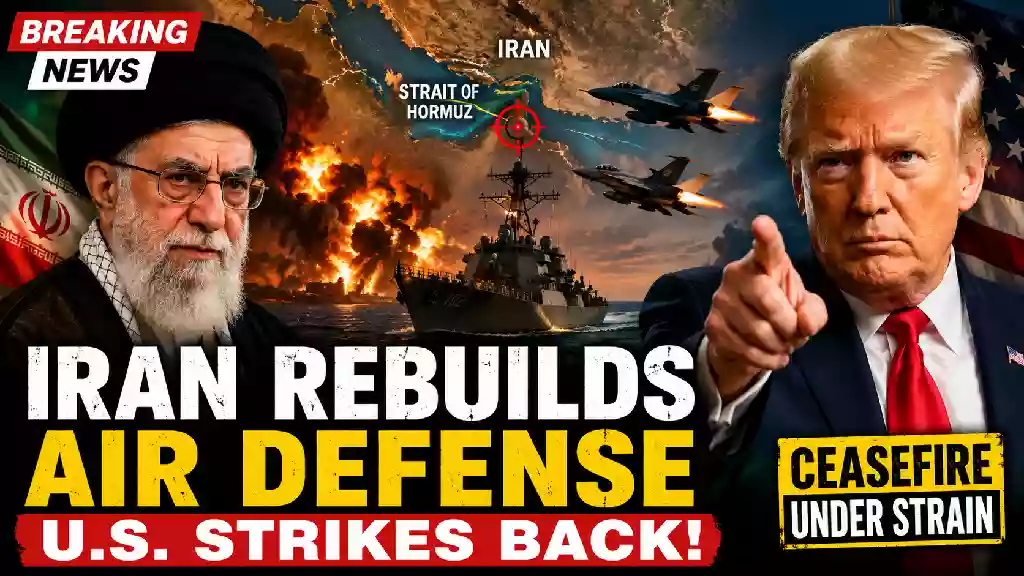
US Officials Say Iran Reconstituted Air Defense Systems After Ceasefire
Renewed US-Iran Tensions Raise Fears of Wider Middle East Conflict
The fragile ceasefire between the United States and Iran is showing signs of collapse after U.S. forces launched a new wave of military strikes targeting Iranian military infrastructure near the Strait of Hormuz. According to U.S. officials, Iran has rebuilt portions of its air defense and missile systems since the ceasefire, prompting a larger U.S. military response targeting Iranian infrastructure near the Strait of Hormuz.
According to a senior U.S. official, Iran has reconstituted portions of its air defense network, communications infrastructure, drone facilities, and missile-related assets in the weeks following the ceasefire. U.S. Central Command (CENTCOM) responded by carrying out expanded strikes against multiple strategic targets around the vital shipping corridor.
U.S. Targets Iranian Military Infrastructure
The latest military operation came after Iranian forces allegedly attacked a Panama-flagged commercial tanker transiting the Strait of Hormuz. U.S. officials said Iran missed an opportunity to de-escalate tensions and instead chose to continue military aggression.
CENTCOM confirmed that American aircraft struck surveillance installations, communication networks, air defense systems, drone storage facilities, and mine-laying capabilities used by Iranian forces. Officials described the operation as significantly larger than previous strikes conducted days earlier, emphasizing that Iran had relocated and rebuilt several military assets since the ceasefire.
Military leaders stressed that U.S. forces remain prepared to respond to any further threats against regional security or international shipping.
Iran Promises Stronger Retaliation
Iran responded by launching missiles and drones at U.S. military installations in Kuwait and Bahrain, escalating concerns that the conflict could spread throughout the Persian Gulf.
Iranian officials warned that any future violations of the ceasefire would trigger an even stronger military response. Despite the attacks, authorities in Kuwait reported no casualties, while Bahrain confirmed that a residential building near its airport sustained damage but that no deaths were reported.
The exchange has fueled uncertainty over whether diplomatic negotiations can survive continued military confrontations.
Trump Warns Military Action Could Intensify
President Donald Trump issued a stern warning, stating that continued Iranian aggression could eventually force the United States to “finish the job” militarily if diplomacy fails.
The president argued that Iran’s actions are testing American patience and suggested that Washington still prefers a peaceful resolution. However, he emphasized that all military options remain available should Tehran continue its attacks.
The administration maintains that Iran now controls the direction of the conflict. Officials say lasting peace remains possible if Tehran honors ceasefire commitments and returns to negotiations.
Strait of Hormuz Remains Global Flashpoint
The Strait of Hormuz remains one of the world’s most strategically important maritime chokepoints, carrying a significant percentage of global oil exports. Any disruption to commercial shipping through the waterway could have immediate consequences for international energy markets and fuel prices.
Although commercial vessel traffic continues, repeated military incidents have increased concerns among global shipping companies and energy traders.
Analysts warn that additional attacks could trigger higher oil prices, increased insurance costs for cargo vessels, and broader economic uncertainty worldwide.
Political Debate Grows in the United States
The renewed fighting has also sparked political debate in Washington. While national security officials argue that military pressure is necessary to deter Iran, many Americans remain concerned about the possibility of a prolonged conflict.
Political analysts note that energy prices and Middle East stability are becoming increasingly important issues ahead of upcoming elections. Rising gasoline prices and fears of deeper U.S. military involvement could influence voter sentiment if tensions continue to escalate.
Some commentators argue that diplomacy should remain the priority, while others believe stronger military action may ultimately be required to eliminate Iran’s military threat permanently.
Israel Closely Watches Developments
The situation is also being monitored closely by Israeli leaders and citizens, who view Iran as one of their most significant security threats.
Observers note that many in Israel favor decisive military action against Iran’s military infrastructure, believing a negotiated settlement may not permanently eliminate the threat posed by Tehran’s missile and nuclear programs.
Meanwhile, U.S. officials continue to emphasize that diplomatic channels remain open, even as military operations continue.
Uncertain Path Ahead
The latest exchange demonstrates how quickly the fragile ceasefire between Washington and Tehran could unravel. Although negotiations technically remain underway, both nations continue to exchange military strikes, leaving the future of regional stability uncertain.
Whether diplomacy can prevent a broader conflict may depend on decisions made in the coming days. For now, the Strait of Hormuz remains a focal point of global concern as military, economic, and political risks continue to rise.
#Iran #USIran #StraitOfHormuz #MiddleEast #BreakingNews #DonaldTrump #CENTCOM #MilitaryNews #WorldNews #OilMarkets
Trump Administration Reports Increased Shipping Activity as Iran Talks Continue
https://houseofsaud.com/iran-missile-restoration/